

If you look at your brand’s social dashboard or campaign analytics right now you’d probably see a pattern: a few posts or executions get huge attention. Tens or hundreds of thousands of views, but deliver little measurable value like conversion. But here’s the thing: the posts or campaigns that deliver real, measurable growth are hiding in the middle or long tail — they don’t look flashy but convert better and compound. Notice how many “viral” posts get massive reach yet zero qualified leads or how the campaign that only got 10,000 views ended up driving 500 new customers i.e. 5% conversion while the 200,000-view piece yielded nothing. That’s real and many marketers ignore it until it’s too late. So what’s the disconnect? The disconnect is virality ≠ growth. You can achieve high reach without relevance, high attention without alignment, and high measurement without outcomes. In 2026, the main difference between viral content and a viral growth engine is how well your brand is positioned for scale, how well your content is architected to spread, and how aggressively you amplify intelligently. What Does Viral Growth Look Like in 2026? If you compared the viral marketing of 2016 and 2026, you’d see that audiences have shorter attention spans. Algorithms optimize for “time spent” and “engagement,” not just external shares. Many searches now end without a click, reducing the chances your content ever leaves the platform it was seen on i.e. zero-click search behavior. Recent studies show that of 1,000 U.S. Google searches, only ~374 click through to another site. Zero-click search behavior in 2024 — only 37.4% of Google searches lead to an external click (SparkToro / Datos, 2024) Niche communities, private groups and micro-influencers now outperform broad audiences in triggering sharing. A message that fits a community’s values, language or moment can spark faster than a generic mass campaign. What this means: you can’t rely on catching the algorithm’s wave alone. You must design viral growth strategies that align with platform mechanics, audience microstructures and community ethos. Brand Positioning & Story If your content is flying solo, it’s never going to stick around for long. What makes content get stuck in our heads and gets shared over and over as opposed to just being a fleeting fad is that it’s anchored to the brand’s identity. To cut through the noise, you need a virality blueprint – a bit more than just a wild idea, a clear plan mapped out with what your brand stands for and what your audience is looking for, along with an emotional trigger that gets them hooked. For example: When we take a closer look at the viral campaigns that really made a splash, like Old Spice, Heineken’s “Worlds Apart” experiment and so on, what we see is that the one thing they all have in common is that their content is deeply rooted in the brand’s story. Old Spice’s iconic “The Man Your Man Could Smell Like” campaign — a case study in brand-anchored virality (Think with Google) On the other hand, a lot of marketers try going after “trendy content” (all the latest memes, trying out the latest challenge) without really tying it back to what makes their brand tick. Sure, that might give you a bit of a short-lived boost, but don’t expect that kind of stuff to stick around. There are a few exceptions out there (like stunt brands, for example) – but for most of us trying to drive real growth, you need to use virality to help fortify your brand’s position, not take attention away from it. Viral Growth Mechanics Viral mechanics are the triggers and structures inside your content that make sharing frictionless, scalable and contagious. Think of them as the engine behind the “viral flywheel”. The key metric is the K-factor, which in viral marketing is roughly: invites sent × conversion rate of invitees to sharers. If your K > 1, your social loop is growing on its own. Here are the core viral mechanics to choose from, but you must match them to your audience, not shoehorn them: Referral Loop We want to make sure both the person who invited and the person who got invited get rewarded (like “you both get X”) so that everything feels fair and there’s equal motivation to get people to share. Micro-Share Triggers Slip those ‘share this bit’ buttons and quote cards into your articles, and nudge people to send it to a mate – give readers easy ways to share the good stuff. Kickstarting The Loop Get some insiders and micro-influencers on board to get the ball rolling, or find some enthusiastic early adopters and active communities that can help kickstart your loop for you. Now, as you’re designing your mechanics, think about what kind of vibe your brand has, what kind of content your audience likes to share, and what kind of story you’re trying to tell. Don’t overcomplicate things. If your audience isn’t likely to share some weird loop, just go with what they like. Amplification & Feedback Even the most brilliant, beautifully engineered piece of viral content just won’t take off on its own; you need some serious help and a constant stream of feedback. Amplification channels & levers: Feedback loops: Scaling tactics: when your content starts to fly, throw some more cash at it and give it an extra push – but don’t get too carried away – make sure the amplification is still in line with your brand’s overall vibe. Case Studies HubSpot’s inbound music video In 2008, HubSpot produced a great video parody entitled “You Oughta Know Inbound Marketing” based on the popular Alanis Morissette song “You Oughta Know.” Their video recounted the story of inbound vs outbound marketing through a full-length music video. Within just 24 hours, the video received 14,000 views, and made YouTube’s most viewed list. Soon, it was being shared all over the place. The Pitch: HubSpot didn’t simply sell the software itself; they defined themselves as a movement for

3 Hidden Brand Visibility Killers & How to Beat Them
You can have a fantastic product that people love, a killer marketing campaign, and still be completely invisible to new customers. Take Particula for example; they raised $2M+ on Kickstarter for GoChess – an AI chessboard. The campaign became the most-funded chess project ever on Kickstarter, and it went viral. Anyone would be happy about this. Then their marketing pulled out the data: Most of the traffic was coming from people who had specifically searched for “GoChess” or “Particula” online. These were people who were already familiar with them. But when it came to being They’d built awareness, sure, but they hadn’t been discovered. And there’s a big difference between the two. I’ve seen this same scenario play out and wreck the visibility of companies with real budgets, real customers, and solid product-market fit. The issue is rarely the quality of what you’re building. The real problem starts when someone searches for exactly what you sell, and you, yes you, are invisible at the moment it matters most. Here are five things I’ve seen kill visibility for brands, and how each one can be turned around in just a few weeks with the right approach. The 90% Branded Search Trap After Particula’s Kickstarter campaign ended, their agency did something most brands never think to do: they segmented search traffic by query type. What they found was telling. Branded searches made up most of the traffic, while searches like “smart chess board” or “how to” were almost nonexistent. That was a problem because people searching for “smart chess board” didn’t even know GoChess existed. They were using generic terms on Google, and GoChess wasn’t showing up. If you don’t rank for “smart chess board,” you’re not even in the consideration set. Most brands don’t distinguish between visibility driven by press coverage and visibility driven by search. You get featured in TechCrunch, traffic spikes, and “GoChess” searches shoot up on your dashboard. But that traffic comes only from people who read the article and typed in your name. Once the press cycle fades, those searches drop to zero. Meanwhile, hundreds of people are searching every month for “smart chess board” — people who are ready to buy, and you remain completely invisible to them. Here’s what the team at TCF did to fix it: They took the time to rebuild Particula’s search presence around category keywords instead of brand terms. In months 1 and 2, they focused on the technical side. They improved site speed since slow sites rank lower, restructured the site so Google could properly crawl the category pages, and rewrote all meta descriptions to target category keywords instead of brand variations. Months 3 to 6 were all about content. They created three to four blog posts per month, each targeting a specific category search, such as: They also rewrote product pages to rank for generic search terms while still converting visitors who landed there. The results came quickly. Organic clicks increased by 278% in six months. Organic traffic and purchases quadrupled, and they began outranking established competitors for key category terms. Here’s what you see when you search “how to win every chess match”: Do this: Open an incognito browser window and search for what you actually sell, not your brand name. Use the exact words a stranger would type: “project management software for small teams”, not “our company.” Check if you show up in the top 10 results. If you don’t, you’re invisible. Now do this 5 more times with different variations: Write down where you rank for each (or if you don’t rank at all). Pick the search term with the most commercial intent, the one where someone’s clearly ready to buy, not just researching. Write one 1000-2500-word article answering that exact query. Use the search term in your title, first paragraph, and 2-3 subheadings. Don’t keyword stuff, just answer the question clearly. Add your own experience or data if you have it. Publish it this week. Check back in 2-3 weeks to see if you’ve moved up in rankings. Alternatively, if you want data, install a free trial of Ahrefs or SEMrush. Plug in your domain. Go to “Organic Keywords.” Sort by position. Look at what you actually rank for. If it’s all branded terms, you’ve confirmed the problem. Export the list of non-branded keywords (if any exist) and double down on those topics. The Platform Advertising Blacklist Ben Witte launched Recess—a CBD-infused sparkling water—in October 2018 from his New York apartment. First month sales hit 40X what he’d projected. 5000 orders, ready to scale. Facebook rejected every ad he submitted. Instagram suspended the account within days. Google Ads banned them before they could spend a dollar. Witte was a mobile strategist at AdRoll. He knew exactly how to run performance marketing campaigns. The platforms just wouldn’t take his money. The CBD market hit $7.59 billion in 2023, but Meta and Google prohibit CBD advertising entirely. Doesn’t matter if your product is 100% legal hemp-derived with less than 0.3% THC. Doesn’t matter if you have lab results proving it. The platforms ban it. Most DTC brands scale through Facebook retargeting, Google Shopping ads, and lookalike audiences. CBD brands get none of that. Witte couldn’t outspend competitors on ads. So he had to build distribution channels that the platforms couldn’t shut down. Here’s what Recess actually did: For 18 months after launch, Recess spent $0 on paid ads. Instagram was their primary engine, with 52,500+ followers built organically. They skipped CBD education content (ingredient breakdowns, benefits infographics). That feels medicinal and gets flagged. Instead, they posted aesthetic lifestyle content focused on “feeling good.” The vibe, not the molecule. Email drove revenue. They built 40,000 subscribers with 25% open rates, versus 14.5% industry average. Every email drove direct sales through a channel no platform could block. They leaned into events. Sampling at Y7 Studio (hip-hop yoga chain), partnerships with WeWork Rising. When digital channels locked them out, they built awareness through real-world experiences. Then Witte made a
Why Your Brand Messaging Isn’t Converting (and What Psychology Reveals About It)
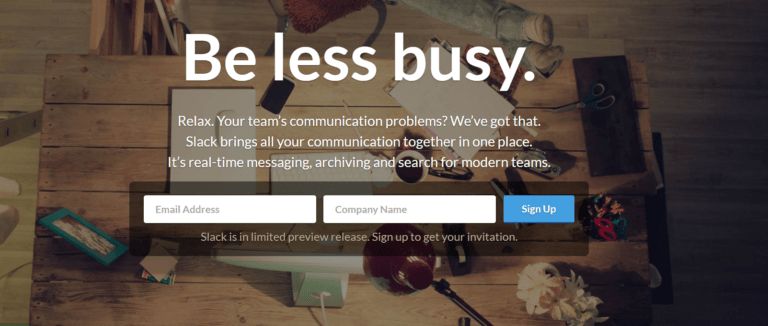
When Slack first launched in 2013, its homepage brand messaging said: It sounded great; until it didn’t. The line was too vague. No one was searching “how to be less busy at work” on Google. They were most likely searching “how to stop endless email threads at work” or “Best app for team messaging,” the pain points Slack’s early demos targeted. That’s a real problem most team leads or companies at large face. Messages like that won’t convert because it’s speaking in concepts, not pain. When people search for solutions on Google, they hardly care about the concept. There’s a burning problem that needs to be solved. You wonder why your “clear” copy doesn’t resonate. The truth is that people don’t act on clever slogans; they act when you describe frustrations like email chaos better than they can. It’s no fluke. It’s psychology. And once you understand how emotion drives decisions, your brand messaging stops sounding good and starts working. Let’s get into it. When Apple released the first-ever iPod, they didn’t try to sell it by saying, “1GB MP3 player” because they understood consumers do not care about those cold, technical facts. Except you are trying to sell only to techies. Instead, they said: Concrete imagery beats technical facts when the goal is conversion, not documentation. Just as advertising researchers van Horen, Wänke, and Mussweiler put it in their 2023 study: “…for advertising in retailing and during a sports event, showing that concrete, rather than abstract, communication is especially persuasive when people experience uncertainty” No emotion = no action. So when your landing page says, “We provide innovative digital solutions for modern businesses,” it’s logical, but emotionless. And emotionless doesn’t convert. To fix this, you have to translate your feature into a feeling: It’s been proven time and again that people buy peace of mind, not feature sets. 2. The biggest conversion killer: you’re solving the wrong problem. Here’s what a lot of brands get wrong: most messaging fails not because it’s bad writing, but because it’s written for the wrong pain. Take Basecamp. For years, project management software shouted about collaboration features. Basecamp did something different. They built their message around overwhelm because that’s what their target audience wants to be addressed. Here’s a quote from one of their customers that corroborates this sentiment: “Stressful, impossible, difficult, overwhelming.It was honestly a hot mess. I would lose track of deadlines left and right and they would creep up on me at the last minute. My boss would ask me a question about a past project and I would struggle to hunt down my notes regarding it (because they were all in email). As hard as we tried to stay organized we had a hard time managing our projects and work flow. When dealing with design projects for over 90 practice sites it was like getting lost in a giant corn maze.” Jennifer Hawks, ProHealth Physicians This is a real problem their product caters to. And That line speaks directly to how work feels before using their product. That’s what behavioural psychologists call “problem alignment“: starting where your customer actually is, not where you want them to be. HubSpot’s conversion optimisation research tells us that conversion only improves a lot when brand messaging is aligned with user pain points. This is not because of clever design, but because relevance makes users feel understood and prompts them to take action. Brainstorm less and listen more. Here’s what to do: 3. Familiar beats clever every time. Clever copy wins awards. Simple copy converts. Behavioural scientists call this “cognitive fluency“. It means the easier something is to process, the more we trust it. Here are proofs that simple words convert better. When brands swapped clever for clear and practical: Case Reworded the CTA text just above the form. Specifically, replaced “Skin consultation” (generic) with “Expert opinion,” which more clearly conveyed the benefit. (static.wingify.com) Result What this supports Kaya (via VWO) Reworded the CTA text just above the form. Specifically, replaced “Skin consultation” (generic) with “Expert opinion,” which more clearly conveyed benefit. (static.wingify.com) 137.5% increase in conversion rate (from ~4% to ~9.5%) just from the CTA wording change. (static.wingify.com) Demonstrates that making the CTA more specific/benefit-focused and reducing vagueness can have large impact. FROGED / Marketingsherpa Example Changed CTA from “Learn More” to “View pricing” on a software product page. The old CTA didn’t clearly tell users what to expect. (MarketingSherpa) Increased CTR from 2% to 5%, and increased conversion to paying customers by ~20%. (MarketingSherpa) Direct illustration: clarity (tell people what they’ll get) beats generic actions (“learn more”). GoCardless Tested “Request a demo” vs “Watch a demo.” The word “Request” implies delay/effort, “Watch” suggests instant value. (HubSpot Blog) “Watch a demo” version had 139% more conversions than “Request a demo.” (HubSpot Blog) Words matter: small shifts in how “action” is phrased change perception of effort, friction, immediacy. Lucidpress Originally used “Sign up free” across their CTAs. They changed to CTAs specific to the visitor’s page content: “Design a [keyword from page].” So instead of generic “sign up”, they tailored to what the page visitor was motivated by. (MarketingSherpa) Got ~5% increase in registrations and ~6% increase in engagement metrics after the change. (MarketingSherpa) Tailoring CTA copy to visitor intent or context—making it clear what the user will do—boosts effectiveness. Consolidated Label (via VWO) Added prominent CTA button “Instant Online Quote” in a product page where control version had no CTA button. So from no immediate “get-quote” option to “Instant Online Quote.” (static.wingify.com) Achieved a 62% increase in conversions. (static.wingify.com) Emphasizes clarity (+ immediate, benefit-oriented action) rather than fancy wording or delaying action. Here’s what to do: This is a reminder that your clever line might make you or your creative director smile. But your customer just wants to understand you quickly. What do these three lessons on brand messaging have in common? None of this is about tricks.It’s about empathy, clarity and timing; the same fundamentals good marketers have used for decades. Before you redesign your site again, test your

Attention is Currency: How to Win It and Keep It
I’m going to challenge something a lot of marketers believe: that shorter attention spans are the problem. They’re not. Buzzfeed built its entire business on quick hits and viral content. Millions of people watched their videos. Then they laid off most of their news team in 2023 because they couldn’t make money from all those views. (Screenshots from Wall St. showing BuzzFeed’s decline. Source.) Compare that to The Information. They charge $399 a year for business news. They have way fewer readers than BuzzFeed ever did. But they’re profitable because their readers care about what they publish. BuzzFeed got lots of attention. The Information got valuable attention. Guess which one survived? The “goldfish attention span” myth has led everyone to try to be more shocking. More immediate. More disruptive. But disruption isn’t attention, it’s just noise. Real attention is when someone permits you to keep talking. And that changes everything about how you should be marketing. Why the Attention Economy Feels Impossible (And What Works) Here’s the problem: You create great content, and it gets lost in the noise. You see competitors getting huge reach with mediocre posts. You’re told to “just be consistent” while watching random TikToks go viral overnight. It feels rigged because we’re all playing by the wrong rules. The conventional way to look at it is: Attention is scarce → So let’s create more content → Then we fight harder for attention → Winner takes all. But that’s an arms race we all can’t win. There’s always someone willing to be more outrageous, post more often or spend more on ads. Here’s what works: Good attention from fewer people beats scattered attention from everyone. The Permission vs. Interruption Framework The last time you bought something online, probably wasn’t because of an ad that interrupted what you were doing. Take Patagonia. They could run ads about technical fabric features or eco-friendly manufacturing. Instead, they publish stories about environmental activism and tell customers not to buy their jackets unless they really need them. This loses them attention from people who just want cheap outdoor gear. But it gains them intense loyalty from customers who care about environmental issues. These customers pay full price, rarely return items and become walking advertisements for the brand. Compare that to fast fashion brands that interrupt you with “50% off everything” ads. They get immediate attention and quick sales. But their customers have no loyalty and will switch brands for a better deal tomorrow. Patagonia earns permission to keep talking. Fast fashion brands have to keep interrupting louder and louder to get noticed. The Compound Attention Effect Attention is different from other marketing metrics. Most things are better. More traffic, more clicks, more impressions. But attention compounds. One person who pays attention to your stuff is worth way more than 100 people who barely notice it. Here’s why: People who pay real attention to you tell their friends. They come back. They buy more stuff. They stick around longer. Netflix figured this out early. They don’t optimize for “most people watching for 30 seconds.” They optimize for “people who binge entire seasons.” Those viewers are way more valuable customers. The Real Attention Winners (And What They Do Differently) Let me show you some companies that cracked the attention code, not by being louder, but by being more relevant to the right people. Case Study 1: Gong Here’s what Gong does: they make software that records and analyses sales calls. One of the things we can learn from Gong is that instead of just talking about their product features, they started publishing research about the details of sales conversations. Here are the things they did: Why this mattered/matters: Sales needs fewer opinions and more data that matter. Gong gave them insights nobody else could provide by analyzing actual sales conversations. Case Study 2: Morning Brew’s Daily Habit Morning Brew solved a simple problem: business news was either boring or overwhelming. So they made it quick and fun. Here’s their system: This simple approach got them serious results: Morning Brew didn’t just get attention. They became part of people’s morning routine. Skipping their email feels like skipping coffee. How to Build Better Attention (Not More Attention) Here’s how to shift from chasing everyone’s attention to earning the right people’s attention: Step 1: Find Your Real Audience Most companies try to get attention from “potential customers”. That’s too broad. You need to find people who: Design for those people specifically. Even if everyone else finds it boring. Step 2: Map The Path How does someone go from never hearing about you to becoming a customer? What’s the path? For example, a B2B software company might look like this: Each step should earn you permission to ask for more attention. Step 3: Build Trust Over Time This is what most companies miss: Trust makes people more likely to pay attention to you in the future. You build this trust by: Step 4: Measure What Matters Stop counting vanity metrics. Start measuring quality: Good attention looks like: Bad attention looks like: Why This Works Better Long-Term The attention-seeking is getting harder. More content, more platforms, more noise. But companies that focus on quality attention instead of quantity are building something their competitors can’t copy: real relationships with people who matter to their business. When you optimise for good attention over lots of attention, three things happen: You spend less to get customers: People who choose to pay attention to you are more likely to buy. Your customers are worth more: People who understand what you do become better, longer-lasting customers. You grow faster: Good customers tell their friends. Word-of-mouth is still the best marketing channel. This takes time. Your numbers will be lower at first. Your social media manager will freak out about engagement rates. But companies that focus on quality attention build businesses that last longer than those chasing viral moments. Stop Chasing Scraps, Let Us Help You Find Those Who Matter Our Digital PR Agency:

Positioning Your Brand to Be Trusted Before You’re Known
If you position yourself as ‘known’ before ‘trusted’, your marketing will fail. We’ve seen this backwards approach kill more promising startups than bad products ever could. Reid Hoffman’s first startup, Socialnet, failed despite having a great product idea, and he had to return investors’ capital, not because the idea was wrong but because nobody trusted an unknown founder with their problems. However, the truth is that trust comes first, and recognition follows. Here’s what we’ve learned after studying dozens of unknown-to-trusted brand transformations: positioning for trust before fame isn’t just smarter – it’s the only way for resource-constrained startups. What Trust-First Brand Positioning Means for Unknown Brands Trust-first positioning means prioritising being recognised as trustworthy or credible before launching awareness campaigns. It’s about understanding that prospects evaluate your brand trustworthiness and credibility in 7 seconds, and unknown brands lose that evaluation unless they’ve built specific trust mechanisms. 4 Credibility Signals That Build Brand Trust Fast 1. Credibility Signals: What makes prospects think “these people know what they’re doing” 2. Authority Markers: Evidence that you understand their specific problems better than competitors 3. Social Proof Systems: Third-party validation mechanisms that convert sceptics 4. Risk Reversal: Reducing the risk of choosing you over established alternatives Why Trust-Based Marketing Is the New Default for Early-Stage Brands Our current digital world has changed trust requirements. More than finances, more than product, and more than market position, talent is the most important differentiator, according to LinkedIn co-founder Reid Hoffman. But talent without trust signals is invisible to your target market. Google’s E-E-A-T algorithm changes (Experience, Expertise, Authoritativeness, Trustworthiness) now prioritise trust indicators over traffic metrics. B2B buyers complete 57-70% of their research before engaging with sales teams, so your trust positioning has to work without human intervention. Case Study: When Trust-First Positioning Saves a Failing Launch We’ll show you a positioning failure that illustrates these principles. The Trust Crisis In 2011, Dollar Shave Club faced a near-impossible task: breaking into a market dominated by Gillette, a company with 70% market share and a billion-dollar ad budget. Founder Michael Dubin had no industry experience, no credentials, and a product people could buy cheaper at any drugstore. Dollar Shave Club’s first promotional video got almost 5 million views in two months. A 1 dollar razor? Most people thought it was some sort of gimmick. The video was funny and catchy, sure. But buying razors online in 2012 was strange, and most importantly, they weren’t trusted yet. Because virality still doesn’t equal trust. The Research In this case, Dubin’s team uncovered more trust gaps instead of awareness gaps: The Trust-First Repositioning In rebuilding gaps of trust, Dollar Shave Club repositioned from “cheaper razors” around three trust-building elements: Credibility through transparency: Customers knew exactly what they would get, their “no-strings” pricing, when, and for how much. An order confirmation email would contain a detailed list of the order, and on the website, customers could see the prices in full beforehand. Customers were satisfied with the straightforward business model, gratefully responding to the try-out advertising during the initial launch phase. Authority through problem identification: Rather than asserting claims of superiority, the brand identifies the core reasons for the displeasure. For razor blade users, these were: overpriced cartridges, inconvenient store trips, and salesmen lurking with only one purpose in the store. Risk reversal through guarantees: For recurring customers, Dollar Shave Club streamlined their razor subscription model but prioritized customer service and offered satisfaction guarantees. The Results The trust-first approach worked: The product never changed. Only how credibility was communicated upfront. The 4 Trust-First Positioning Criteria The question every unknown brand must answer: What makes prospects immediately think “these people know what they’re doing”? Most founders lead with what they do. Trust-first positioning leads with why you’re qualified to do it. Wrong approach: We help B2B companies generate leads through content marketing. Trust-first approach: Former VP of XYZ at three $100M+ SaaS companies now helps pre-PMF startups avoid the content mistakes that waste 6-figure marketing budgets What to do: The difference is not in the service itself, but in demonstrating that the problems that have been solved in the past are implemented in a manner that the prospective clients regard. The specificity category explains how your prospects perceive your brand. Too broad: “Digital marketing consultant” (sounds like you will take any client) Too narrow: “Facebook ad optimization for pet supply stores in Austin” (restricts your market reach) Authority sweet spot: “Performance marketing for DTC brands scaling from $1M to $10M ARR” Authority Building Strategies: Publish contrarian industry insights: Challenge the norm with data-driven arguments. Instead of saying “5 Content Marketing Tips,” try “Why Most SaaS Content Marketing Fails (And the Framework That Converts).” Reference specific tools and metrics: Instead of “improved performance,” say “reduced CAC from $340 to $180 using this attribution model change” Create memorable frameworks: Package your expertise into teachable methodologies with names (like our Trust-First Positioning Framework) The goal isn’t to be the only expert; it’s to be the expert prospects remember when they need your specific solution. Not all social proof builds trust. Without social proof, new businesses risk trust issues when working with a new client. Trust Hierarchy (Most to Least Powerful): Implementation Strategy: Start with relevant proof points: “We have dozens of testimonials”. Not to worry, three customer stories with concrete proof are better than 20 unspecific plaudits. Smaller proofs increase trust: A client case study, then a podcast, capped by industry certification, beats waiting for a big announcement. Proof to the audience: With startup founders, a testimonial from a Fortune 500 CISO means more than with enterprise buyers. If you’re competing with other established brands, you can do something called risk reversal to attract new clients. Risk Reversal Tactics: Guarantee the outcome: “If you don’t see 50% more qualified leads in 90 days, I’ll work for free until you do.” Provide free value upfront: Offer frameworks, templates or short consultations to prove your competence before asking for a commitment. Share your whole process: Disclose

How New Founders Can Use Expert Commentary to Build Authority from Zero (And Land Their First Media Mentions in 90 Days)
New founders get terrible advice about building personal brands. Create content daily. Post on LinkedIn. Build your audience first, then monetise. Here’s what happens when you follow this advice: You spend several months creating content that gets zero engagement. Your “thought leadership” posts collect dust. Your expertise goes unnoticed. The founders who succeed understand one simple truth about authority building: You don’t need to create an audience. You need to borrow one. After analysing dozens of founder media strategies, we’ve found the approach that works fastest for people starting from zero: expert commentary. The founders who master this get their first media mentions in 60-90 days, while others spend years shouting into the void. The Chrysler Executive Who Became America’s Celebrity CEO (Using Strategic Media Positioning) In 1978, Lee Iacocca got fired from Ford after 32 years and joined Chrysler Corporation, which was heading towards bankruptcy. As president, he wasn’t well known outside the auto industry. Chrysler was losing money, and from 1979 to 1986, Iacocca had to rebuild both the company and his reputation as a leader. Lee Iacocca knew something most executives didn’t: media coverage wasn’t just publicity, it was positioning. When Iacocca took over Chrysler in 1978, the company was losing billions and on the brink of bankruptcy. Instead of hiding from the press during the crisis, he did the opposite. He made himself completely available to journalists. His rule: hold press conferences regardless of quarterly results because “Reporters have a story to write no matter how our earnings turn out, their editors don’t give them the day off if we have a dud of a quarter, so why shouldn’t I be available to explain why we fouled up?” The results speak for themselves. Iacocca’s autobiography was the best-selling non-fiction hardback of both 1984 and 1985. Chrysler went from near bankruptcy to profitability in five years. By 1985, he was more famous than most politicians in America. Even the Gallup Poll ranked him as the third most admired man in the U.S after Ronald Reagan and Pope John Paul II. Lacocca did this by positioning himself as the go-to guy journalists called when they needed a credible quote on American business, manufacturing or economic recovery. Why Most Founders Waste Months Building Audiences (Instead of Borrowing Them) Check out what happened to Ryan Hoover before Product Hunt existed. In November 2013, he was running a simple email list experiment about product discovery. The first week? Hundreds of people subscribed with zero promotion beyond a single post on Quibb. But here’s what changed everything: Instead of grinding away at content creation, Hoover reached out to Carmel DeAmicis, a reporter at Pando. They met at a bar. He told her the Product Hunt story. Two days later, she published this: That single media mention did what months of audience building couldn’t: it made Product Hunt look like a real platform worth paying attention to. Within a year, Hoover had closed $6.1M in Series A funding from Andreessen Horowitz. The difference is clear when you see it. Hoover’s own Medium post shows exactly how this went down: email experiment → strategic media outreach → credibility transfer → investor interest. This is the problem with standard personal branding advice. When you have zero followers, your content gets zero traction. You’re shouting into an empty room. But when a journalist quotes you, something magical happens: their credibility transfers to you instantly. Pando readers didn’t care about Hoover’s follower count. They cared that Pando thought his approach to product discovery was worth writing about. Here’s the math that matters: Building an audience of 10,000 engaged followers takes 18-24 months of consistent content creation. Getting quoted in a publication with 10,000 readers takes one strategic conversation with the right journalist. What Media Coverage Does for Your Business We have to be honest about what media coverage delivers versus what founders think it delivers. Media coverage won’t flood your website with customers overnight. Here’s what it delivers: Investor conversations happen faster. VCs scan for signals that founders get their market. Media coverage is social proof that you understand the industry. Top talent answers your calls. Senior candidates research founders before considering opportunities. Media coverage means you’re building something worth joining. Partnership doors open more easily. Businesses prefer to work with recognised voices in their industry. Your media mentions are credibility assets in partnership conversations. Sales cycles get shorter. B2B buyers research founders during purchase decisions. Media coverage is third-party validation that makes you a trusted advisor, not a vendor. The compound effect matters most. Your first media mention leads to speaking opportunities. Speaking opportunities lead to more media coverage. More coverage leads to investor interest and partnership inquiries. Here’s an example of well-executed expert commentary: You can find the whole article here. The 4-Step Expert Commentary System Step 1: What Is Your Expertise That Others Would Quote? An expert can’t be just “entrepreneurship” or “startup growth”. That’s too broad. You need specific expertise that you can back up with case studies and data. Work within this framework: What specific problem do you solve that nobody else in the industry does better? Instead of something like “I help businesses grow”, you can say, “I help B2B SaaS companies acquire enterprise customers when they’re stuck below $1M ARR.” What data-supported opinion do you hold that goes against the conventional wisdom? Maybe you believe cold outreach is the best way to acquire customers for early-stage companies rather than content marketing, and you have the numbers to prove it. What industry trend can you comment on with a unique perspective? Perhaps your education allows you to understand how AI will impact small business accounting in a way that others don’t. Test your expertise: Step 2: Build Your Media Source Profile Create a one page “source sheet” that makes it easy for journalists to quote you. Your source sheet should include: Platform optimization: Step 3: Execute Media Outreach First, help journalists solve their immediate problem (find a credible source) before

How to Prepare for Google’s Next PR-Driven Algorithm Shift Without Losing Visibility
In October 2023, Google rolled out a core update, and even well-optimised websites stopped ranking. Image Overnight, HubSpot and Zapier’s blog traffic dropped double digits according to Sistrix visibility data. Niche sites with fewer backlinks but stronger media footprint (e.g. being mentioned in TechCrunch or Business Insider) held their ground. Hubspot-visibility-1.png What’s going on? Google is rewarding real-world authority, not just optimised content. It’s not just about backlinks anymore. It’s about who’s talking about you. Are you quoted in industry publications? Are journalists citing your content? Are your founders being interviewed in trusted outlets? This isn’t speculation. Google’s documentation confirms with the December 2022 update to E-E-A-T (adding “Experience”) that it wants content from people who’ve done the thing, not just written about it. According to Google: “Does the content provide original information, reporting, research, or analysis? Is the content written by an expert or enthusiast who demonstrably knows the topic well?” This is a digital PR problem, not just an SEO one. In this article, I’ll show you: If your traffic has been dropping and you can’t figure out why, this is likely the reason. Most SEO content is playing a game that Google no longer respects Scroll through the average B2B blog and you’ll find keyword-optimised posts, templated intros and surface-level advice. They’re designed to rank, not to resonate. And increasingly, they don’t do either. In 2024, Google’s algorithm now weighs reputation signals, not just keyword use. As Google’s Search Central documentation says: “Does your content demonstrate first-hand expertise and a depth of knowledge?” And here’s the truth: Google checks this through off-page signals. According to Glenn Gabe’s analysis of the March 2024 core update, sites without external validation (such as press mentions, expert citations, or author credibility) lost visibility, even if their content was technically sound. So what’s missing from the old SEO playbook? So what does algorithm-smart PR material look like? These show up in: As the difference widens between conventional SEO and what Google values, content teams are left with two options: either continue to exhaust keywords or begin to construct reputation assets that Google would find hard to overlook. Why Most Digital PR Doesn’t Improve Your Rankings and What Does Digital PR is a buzzword in SEO, but most of it fails where it matters: visibility. Teams get press mentions. Agencies get backlinks. But rankings? Often flat or declining. That’s because most digital PR strategies are misaligned with how Google measures authority. This isn’t about brand exposure anymore. It’s about structured, verifiable credibility, from the right sources, in the right context, on the right topics. Let’s break down what that means and what to change. You Don’t Need More Mentions, You Need Better Ones Most PR campaigns still chase volume: The assumption is that more mentions = higher authority = better rankings. But that’s not how Google works. According to Google’s own Search Quality Evaluator Guidelines (Section 2.6.4), authority is evaluated through: “Independent, credible sources… topically relevant and demonstrating expertise.” Mentions outside your content’s topic cluster — even from high-DA sites — don’t signal subject expertise. They might dilute it. In the March 2024 core update, multiple content-rich B2B brands with PR-heavy strategies lost visibility. Sistrix’s visibility index shows that sites with a surge in generic press releases or mass guest posts lost between 15–30% of their keyword footprint, despite an increase in backlink count. What Google Rewards Let’s contrast that with what’s working now: Being mentioned in Search Engine Journal, Built In, or Content Marketing Institute means way more than 20 backlinks from generic finance or business blogs. Google looks at where links come from and how often sites are mentioned together to figure out what a site is about. Ahrefs and Majestic have tools that show that the kind of sites linking to you is more important than just the sheer number of links. Credibility builds up over time. If your name pops up in a bunch of well-known publications in the same field, Google begins to link you to that subject. Like, you’ll see Clearbit all over places like SaaStr, First Round Review, and TechCrunch, which are big on SaaS. Being there a lot probably makes their data-driven marketing stuff seem legit to search engines. Google keeps tabs on what people cite. Stuff like Backlinko’s Skyscraper Technique or ProfitWell’s pricing info gets referenced by tons of marketers, SEO folks, and reporters, which just keeps boosting their authority. SparkToro’s 2023 research shows that if your content gets mentioned in industry publications, it tends to do better in terms of organic and referral traffic. How to Build PR That Google Trusts Okay, here’s how to get your PR noticed and make your brand a go-to source: Steps to follow: Next Step If your site isn’t being mentioned in the right places, your rankings will drop, regardless of how much effort you put into your content. Whether you run an agency, a traditional company, or you are just looking to grow your brand, Detutu Media can help you become a trusted source and an authority in your industry. Where do we go from here? Click here to get in touch with us.